Gravel bikes under £1,500
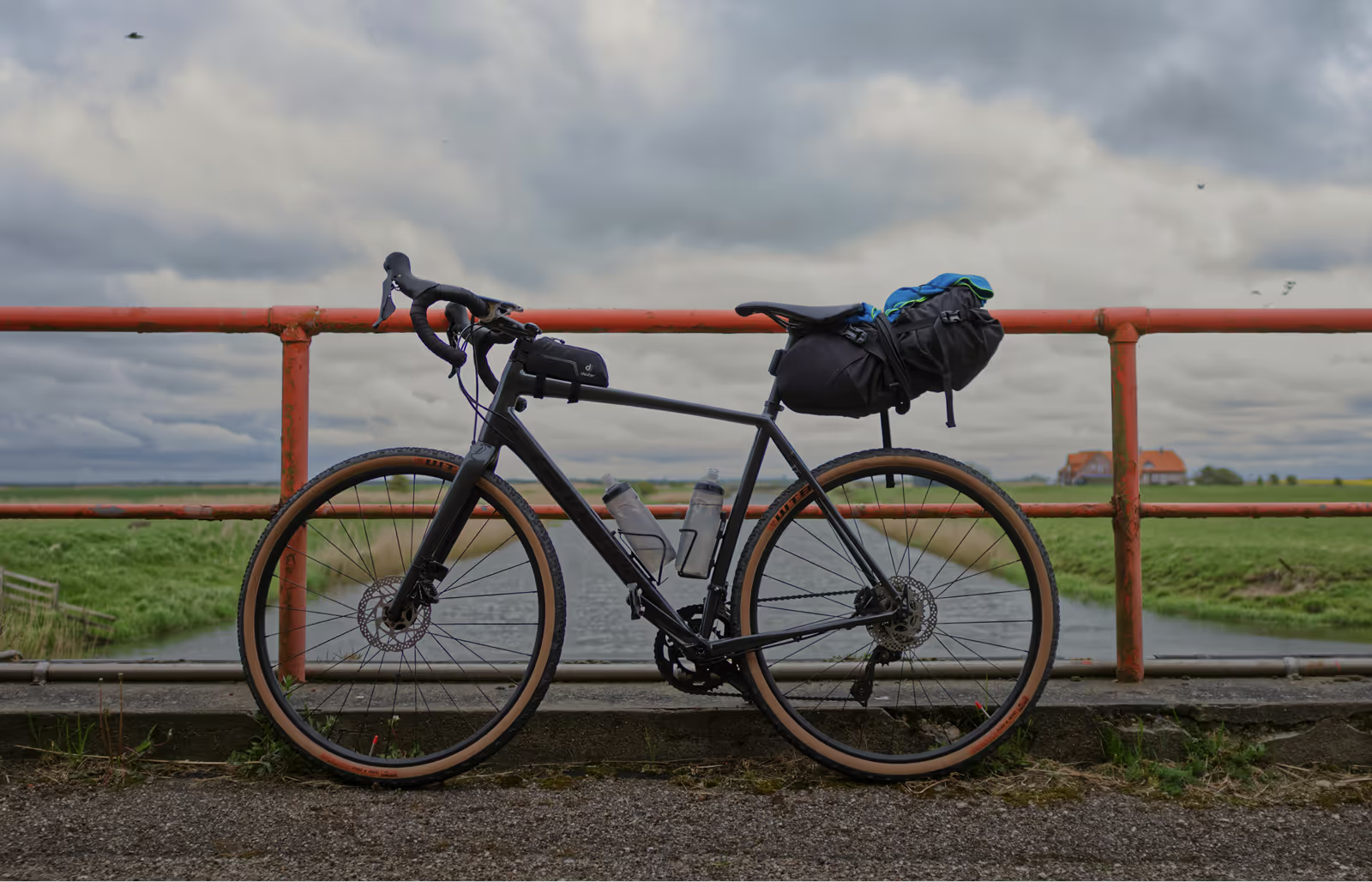
Gravel bikes are the love child of road bikes and MTBs – drop bars up top, chunky tyres below – built for the mixed bag of tarmac, towpaths and tracks many of us ride. They’re designed to handle everything from a pothole-riddled commute to a weekend of bikepacking in the Peaks, without feeling out of place on either.

Best gravel bikes under £1,500, at a glance
Boardman ADV 8.9 – best all-rounder ( £1,200)
Shimano GRX, hydraulic disc and carbon fork spec at this price is rare. Stable on bridleways, still lively on the road, with mounts for guards, racks and bottles.
Boardman ADV 8.9 review
Giant Revolt 1 – comfort & control pick (often just under £1,500)
Carbon forks, wide-range Tiagra and up to 50mm tyre clearance. Flared bars and a neat down-tube mudguard make it a practical, year-round choice.
Giant Revolt 1 review
Cannondale Topstone Alloy 3 – most versatile commuter-to-gravel (£999)
Simple, upgrade-friendly alloy frame with 45mm clearance. A solid entry into gravel that’s easy to live with.
Cannondale Topstone Alloy 3 review
Marin Gestalt – best budget road-biased option (£750)
Agile on tarmac and towpaths with mounts for guards and racks. Suits commuters who want light gravel at weekends; bigger tyres are an easy upgrade.
Marin Gestalt
Boardman ADV 8.8 – best value starter ( £750)
Well-finished alloy frame, carbon forks and dependable kit. Confident handling and great tyres make it an easy first step into gravel.
Boardman ADV 8.8 Review
Quick buyer tips
Tyres
Aim for 40–45 mm for UK mixed terrain; check your frame’s max with mudguards fitted.
Brakes
Hydraulics feel better and need less tinkering; mechanical discs are fine if maintained.
Mounts matter
Bottle, rack and fork mounts make commuting and bikepacking simpler.
Where did gravel bikes come from?
Though the term “gravel bike” sounds like marketing spin, the idea isn’t new. In the American Midwest, where endless farm tracks meet wide horizons, gravel riding became a subculture in the 2000s, spawning bikes tough enough to go the distance but still light and fast. The trend soon crossed the Atlantic, met Britain’s mix of ancient lanes, forest paths and Sustrans routes, and suddenly we had the perfect tool for fast real-world riding.
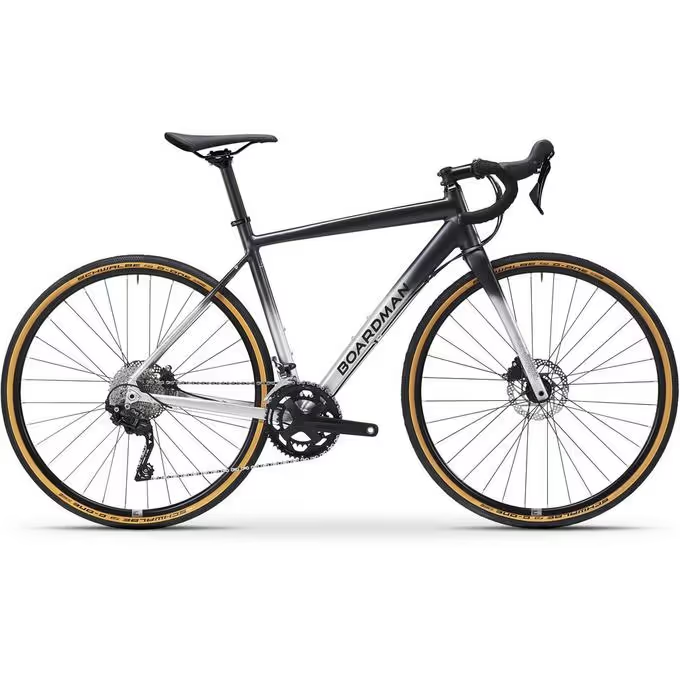
Boardman adv 8.9 - £1,200
Why we picked it
One of the best-specced gravel bikes in its class, consistently praised for value.
Boardman’s ADV 8.9 looks sharp, with its smooth-welded aluminium frame and carbon forks, but the real story is how much capability you get for the price. Shimano’s gravel-specific GRX groupset, hydraulic brakes and tubeless-ready wheels usually appear on bikes costing much more. The geometry strikes a sweet balance: upright and steady when you’re tackling bridleways or loading up for a weekend away, but still lively on the road. With fittings for racks, mudguards and multiple bottles, it’s practical, too.
At just over ten kilos, it’s not a flyweight, but that’s a fair trade-off for the stability, comfort and thoughtful specification. The ADV 8.9 is a confident, forgiving, go-anywhere machine: a great introduction to gravel, or simply a commuter that won’t flinch at rough tarmac and muddy tracks.
Frame/Fork
6061 alloy frame, carbon fork.
Gears
Shimano GRX 2×10.
Tyre clearance
Up to 50mm.
Pros
Outstanding spec for the money, versatile geometry.
Cons
2× drivetrain adds maintenance; not the lightest.
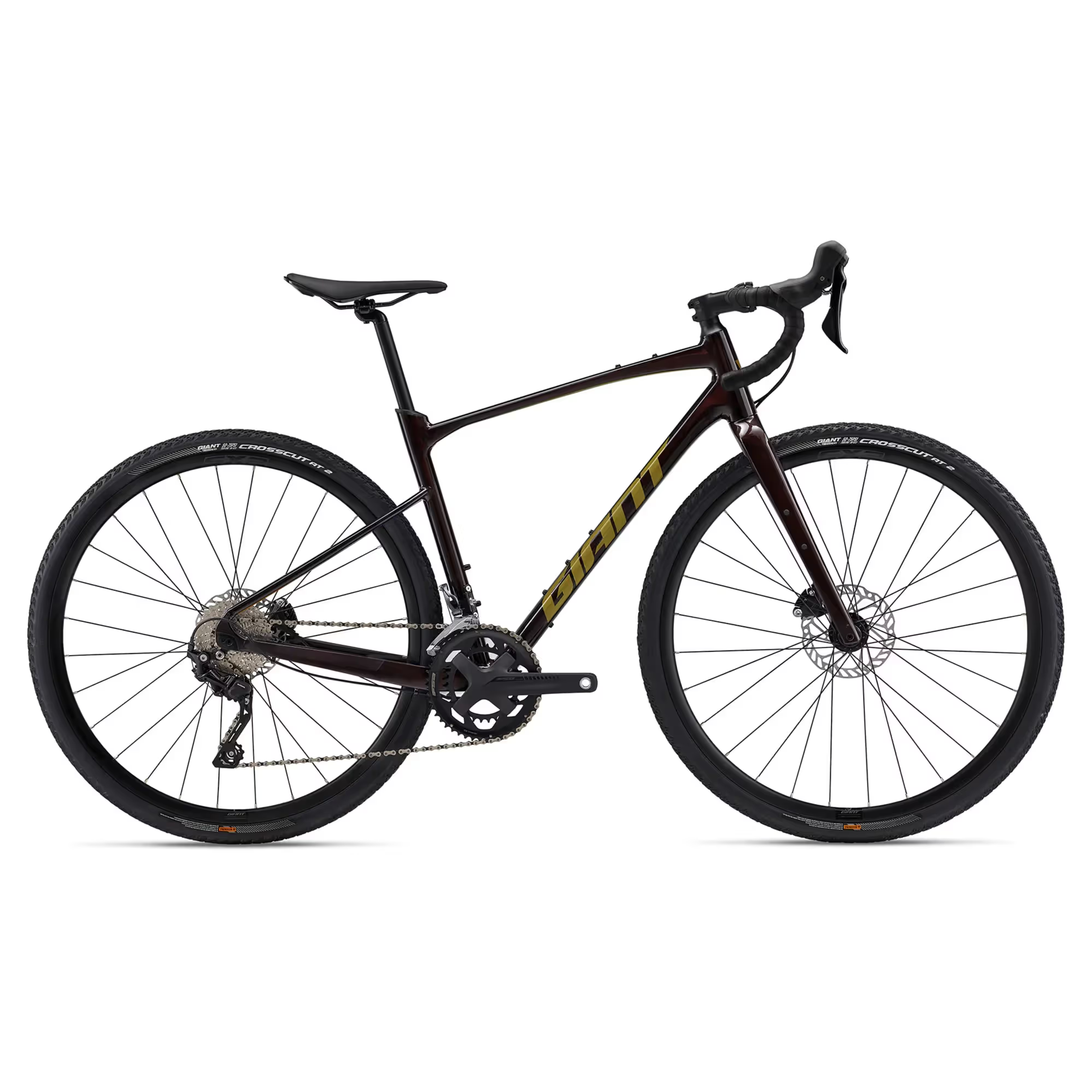
Giant Revolt 1 — If you search you can find it at just under our £1500 threshold
Why we picked it
A versatile and practical choice.
The Giant Revolt 1 might not be the prettiest frame in the gravel world, with its angular seatstays and compact geometry, but it offers impressive performance for the price. Carbon forks help smooth out rough surfaces, and the Shimano Tiagra drivetrain paired with a wide 11–34t cassette provides plenty of range for climbing.
Tyre clearance extends up to 50mm, which means swapping in wider, grippier rubber is straightforward if you want more off-road confidence. TRP Spyre mechanical disc brakes are reliable and allow for inline levers, while a built-in mudguard beneath the down tube helps keep spray and grit away from both rider and cables.
Frame/Fork
Giant “Aluxx” alloy frame with composite fork.
Gears
Shimano Tiagra
Tyre clearance
Around 45mm on 700c.
Pros
Comfortable, adaptable, well-built.
Cons
Stock tyres/components may be modest.
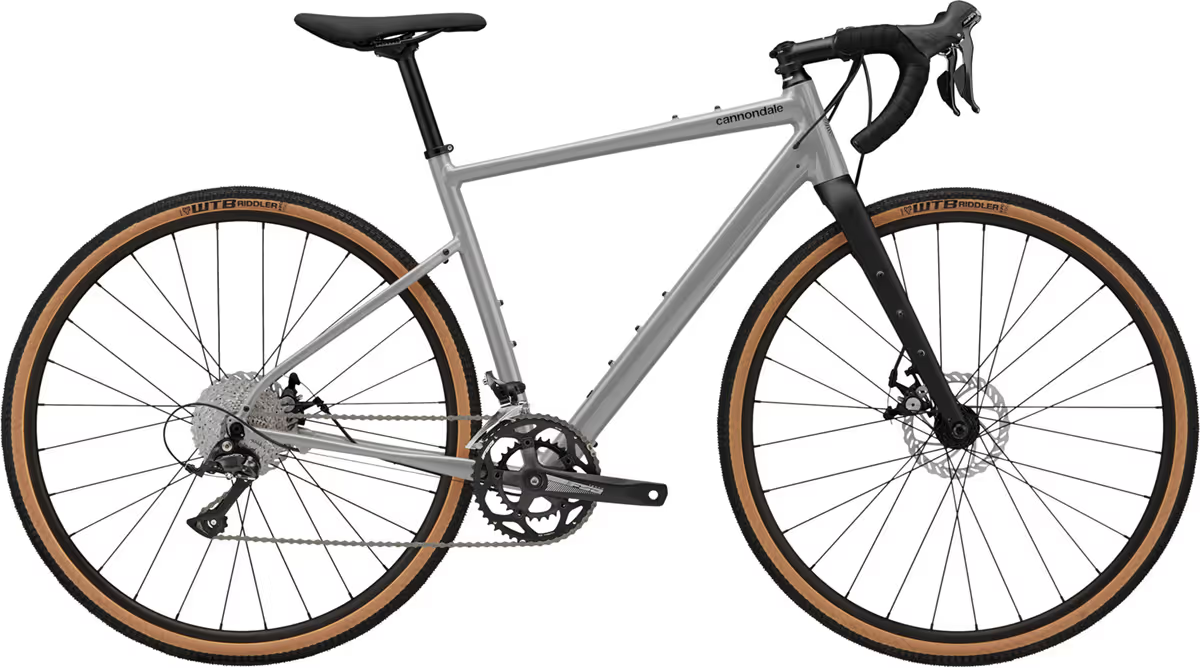
Cannondale Topstone - £999
Why we picked it
A stripped-down entry version of the Topstone, often discounted to under £1,000.
The Cannondale Topstone Alloy 3 brings the look and feel of Cannondale’s high-end gravel bikes to a much more affordable level. It ditches the suspension features of the Carbon model in favour of simplicity, but keeps the dropped seatstays and neat tube shapes that give the Topstone range its distinctive style.
Built around a practical alloy frame, the Topstone Alloy is designed for everyday usability. There are mounts for racks, mudguards and multiple bottles, plus triple-boss fittings on the fork for luggage. Tyre clearance has grown to 45mm, so swapping in bigger, grippier rubber is easy if you want more off-road confidence.
Spec on the Alloy 3 is straightforward: mechanical shifting and Promax mechanical disc brakes, paired with 37mm WTB Riddler tyres as standard. It’s not as refined as pricier models, but the geometry is stable and comfortable, and the threaded bottom bracket makes servicing simple. For riders looking to try gravel without breaking the bank, the Topstone Alloy 3 is a versatile and upgrade-friendly entry point.
Frame/Fork
Alloy with carbon fork.
Gears
Shimano Claris/Sora depending on year.
Tyre clearance
45mm
Pros
Reliable day-to-day gravel commuter.
Cons
Lower-tier components; heavier than pricier models.
Marin Gestalt - £750
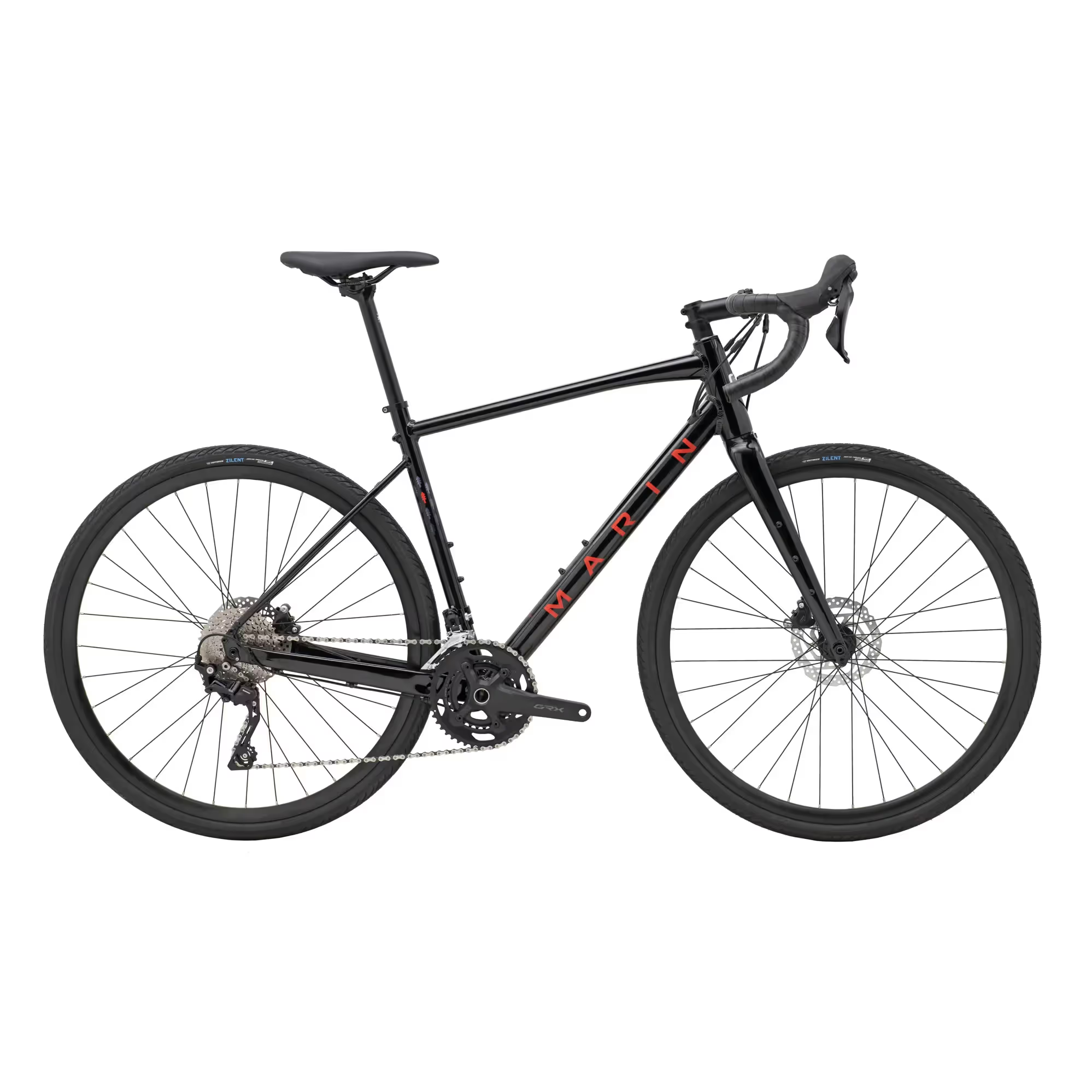
The Marin Gestalt is the entry point in Marin’s “beyond road” range - a simple, good-value bike that blurs the line between commuter and light-gravel machine. Its aluminium frame is well finished and agile, though the alloy forks and basic components show where corners have been cut to keep the price around £750.
Promax mechanical disc brakes lack power compared with the hydraulic units found higher up the range. Tyre clearance is generous - officially up to 35mm, though riders often fit wider rubber - and there are mounts for racks and guards. For longer rides or rougher terrain, spending a little more on the carbon-fork Gestalt 2 brings braking upgrades (and still comes in under our £1500 budget), but as an affordable commuter with weekend-gravel ambitions, the base Gestalt does the job.
Why we picked it
A budget-friendly option blending endurance road and gravel traits.
Frame/Fork
Series 2 aluminium, alloy fork.
Gears
Shimano Claris.
Tyre clearance
Around 35–38 mm (narrower than pure gravel).
Pros
Great price, stable handling.
Cons
Narrower clearance limits off-road ability.
Boardman adv 8.8 - £750
Why we picked it
The most affordable Boardman ADV, still capable of genuine gravel riding.
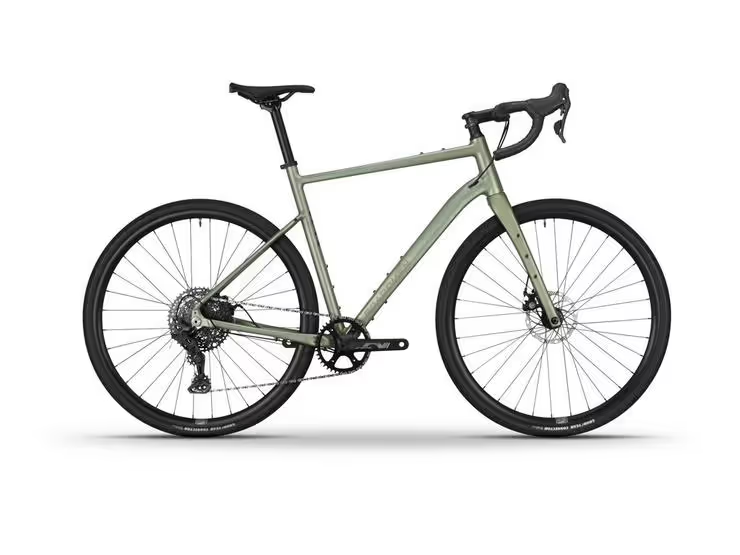
The Boardman ADV 8.8 is built from smooth-welded 7005 aluminium with full carbon forks, giving a balance of stiffness and comfort that suits both commuting and light-gravel rides. Geometry is relaxed enough for stability on loose ground, yet still feels responsive on the road.
The Shimano Sora 2×9 drivetrain offers reliable shifting and a wide spread of gears, while the Schwalbe G-One tyres are an excellent all-round choice for tarmac and hard-packed trails. TRP Spyre mechanical discs provide consistent stopping in all weather, though not the bite of hydraulic brakes. Overall, the ADV 8.8 is a versatile, great-value adventure bike – practical enough for year-round commuting, lively enough for weekend gravel rides, and a reminder that you don’t have to spend a fortune to get a well-sorted machine.
Frame/Fork
Alloy frame, carbon fork.
Gears
microSHIFT Sword 1x10
Tyres
700×38c.
Pros
Very low price for a capable bike.
Cons
Basic groupset; narrower tyres than pricier siblings.
Buying second-hand, ex-demo or refurbished
With gravel bikes holding their value, the second-hand market can be a smart way to stretch your budget towards higher-spec kit. A good used or ex-demo model can ride just as well as new, provided you know what to look for. Check the frame for cracks or dents, inspect the drivetrain for wear, and always ask for a serial number and proof of purchase. Registering or checking that number with a service such as Project 529 or BikeRegister helps reduce the risk of buying a stolen bike and builds trust between buyers and sellers.
Refurbished and ex-demo options from reputable UK retailers are often the safest route. For example, Alltricks lists a dedicated “Refurbished Gravel Bikes” section, while Cycle Limited carries “certified pre-owned” gravel and cyclo-cross bikes, all fully serviced and ready to ride.
Even larger chain retailers sometimes have ex-display or trade-in stock available on request, so it’s worth checking online and asking in store. Buying privately can work too, but be cautious: always meet in person, inspect the bike in daylight, and walk away from anything without a clear serial number or verifiable history. A little diligence goes a long way towards making sure your bargain gravel bike isn’t too good to be true.
FAQs
Are budget gravel bikes good for commuting?
Yes. In fact, many gravel bikes under £1,500 make excellent commuters because they’re built to be tough and versatile. They usually come with rack and mudguard mounts, so you can carry panniers and stay dry in wet weather. The wider tyres soak up potholes and give you more grip on greasy roads than a skinny-tyred road bike. They also tend to have more relaxed geometry, so you sit a little more upright - a blessing in traffic. The only caveat is weight: alloy gravel bikes aren’t featherlight, but the trade-off is comfort and durability.
Which wheel size is best for gravel bikes - 700c or 650b?
This comes down to where you’ll ride. Most UK gravel bikes at this price come with 700c wheels, which feel fast on tarmac and are efficient on smoother gravel paths. Pair them with 38–45mm tyres and you’ve got a good balance of speed and comfort. 650b wheels, on the other hand, are smaller in diameter but let you run very wide tyres - up to 2.1″ on some frames. In the UK, where terrain is mixed, some riders stick with 700c but keep a second 650b wheelset for winter mud or bikepacking.
Can I race cyclocross on a gravel bike?
You can, especially at a local league or beginner level, but it’s worth knowing gravel bikes and cyclocross bikes are not quite the same. Cyclocross bikes are designed for short, intense circuits with sharp corners, obstacles and sprints, so they tend to have steeper angles and snappier handling. Gravel bikes are a bit more laid-back, with longer wheelbases for stability and space for racks and bottles. You’ll get round a cross course just fine on a gravel bike, but if you get the bug you may notice it feels less responsive in tight turns or when shouldering over barriers.
Mechanical vs hydraulic discs - what’s the real-world difference?
Both will stop you in the rain, but they do it differently. Hydraulic brakes use fluid to transmit force, so the lever feel is lighter and the braking more consistent. That matters on long descents or when you’re fully loaded for bikepacking. They also self-adjust as pads wear, which means less fiddling. Mechanical discs use cables, which are cheaper and easier to repair at home, but they need regular adjustment to stay sharp and can feel a bit “wooden” compared to hydraulics. At this price point, some bikes still come with mechanical discs, but more brands are now offering hydraulic setups as standard - worth seeking out if your budget can stretch to it.
What tyre width is best for UK terrain?
The sweet spot is around 40–45mm on 700c wheels. That width is fast enough for road sections but gives plenty of grip on towpaths, bridleways and gravel tracks. If you’re mainly on smoother roads, you could go narrower (35–38mm) for extra speed, but you’ll feel every bump. For rougher terrain or year-round riding, some riders go wider still, especially with 650b wheels, where 47–50mm tyres are common. The important thing is to check your bike’s maximum clearance - some budget frames won’t take tyres much above 42mm with mudguards fitted.
Do I need specific insurance
While there’s no such thing as “gravel bike insurance” as a separate category, all bikes at this price are a target for thieves, so theft cover is a smart move. Standard home contents insurance often falls short - it may exclude bikes over £500 or not cover them away from home. A specialist cycle policy covers theft (at home and when locked in public), accidental damage, and often travel abroad. Sundays also includes options for racing and accessories cover.
How often should I service a gravel bike?
That depends how and where you ride. Mixed surface riding and winter commuting can chew through chains, brake pads and tyres faster than summer road miles. As a rule of thumb:
Check your tyre pressure, brakes and chain weekly - clean and lube after every few rides, especially after wet or muddy conditions.
Every so often inspect cables or hydraulic hoses, have the wheels trued if needed, refresh tubeless sealant.
Book a full service once a year - more often if you clock big mileage.