How to choose the best e-bike insurance in the UK
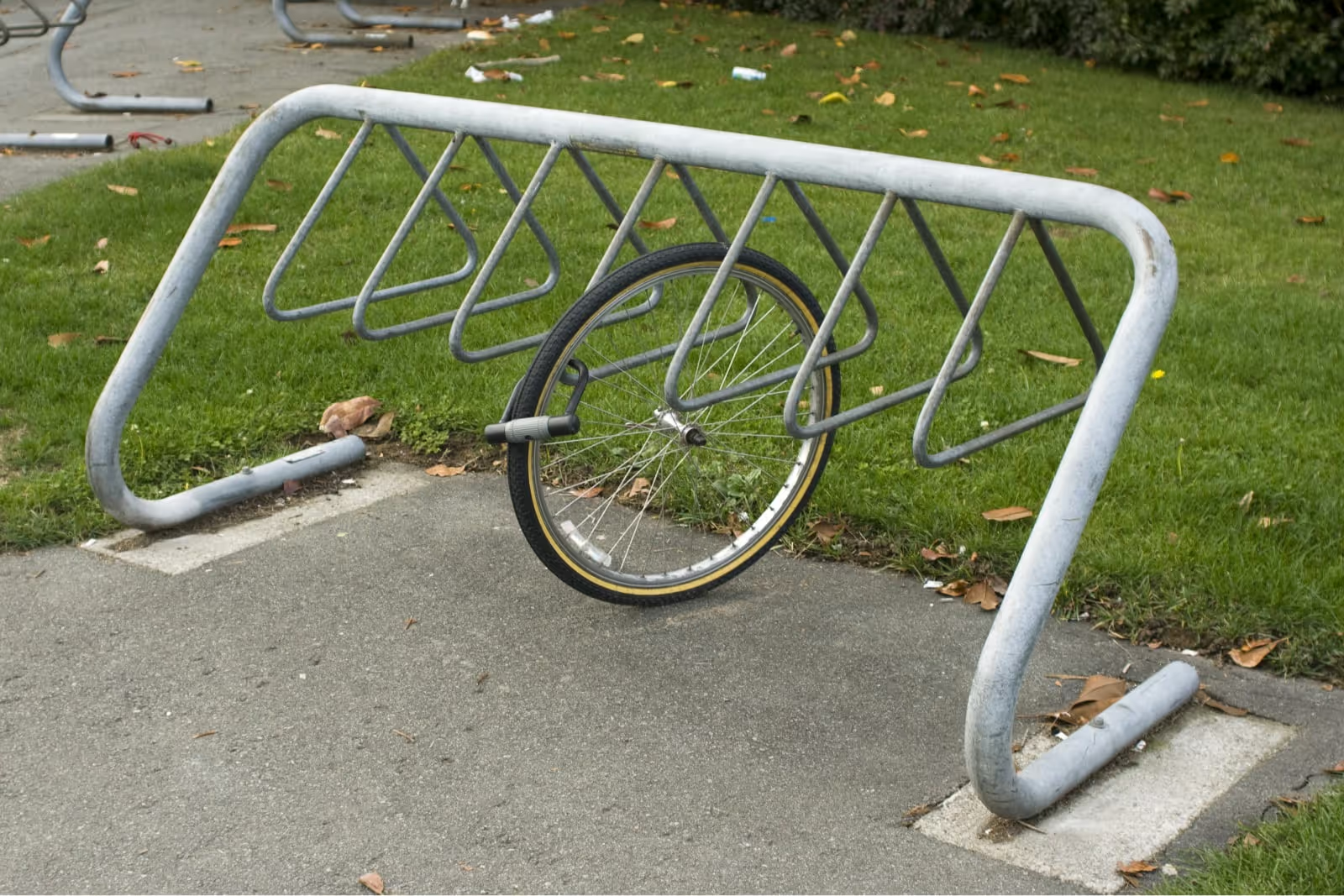
In the age of cordless angle grinders, shady online marketplaces, and police forces often powerless to recover stolen property, a good insurance policy can be one of the only reliable defences against unexpected, eye-watering bills.

The problem is, buying e-bike insurance isn’t as simple as running a search on a comparison site. Policies vary wildly. A cheap monthly price doesn’t mean good value if the insurer won’t pay out when you need them most. That matters when you’ve just dropped a month’s wages on a commuter or cargo e-bike for the school run.
Research is key, but most of us don’t pore over the terms and conditions – life’s too short – so here’s a straight-talking insider guide to choosing cover, and exactly why you need it.
Theft cover
Look out for: depreciation, storage rules, so-called “new-for-old”
Theft is the main reason people insure their e-bike. Just don’t assume every policy pays enough to replace what you lose. A bargain policy is worthless if the payout doesn’t get you back on two wheels, which is the whole point of e-bike theft insurance.
Excess + depreciation = painful surprise
If your £3,000 e-bike is stolen, the settlement may be reduced by an excess and devaluation. With the wrong policy, you might only receive £1,500 – not even close to the cost of a replacement.
Tip: Excess is usually obvious. Depreciation isn’t. Be wary of policies claiming “new-for-old” while quietly applying devaluation tables in the small print.
Locks
Look out for: lock rating, value bands, locking technique
Everyone has a preferred way of locking their bike, but insurers don't care about your habits. They care about compliance. Get ready to upgrade your lock or change how you secure your bike.
MMost e-bike insurers specify three things: the rating your lock must have (for example, Sold Secure Gold – check our lock requirements to see if yours qualifies), what you may lock to (not everything that doesn't move counts as an "immovable object"), and how you must attach the lock. For advice on locking best practice, see our guide to the most common bike locking mistakes.
Tip: The number one reason claims are rejected is an incorrect lock or incorrect locking technique. It's the simplest – and costliest – mistake to avoid.
Battery cover
Look out for: theft protection and battery safety
Good e-bike insurance should treat the battery as a component, not an accessory. Fortunately, e-bike batteries are no longer treated as “accessories” by most specialist insurers, which means they’re covered as part of the bike rather than an optional extra. That’s important: a stolen battery can cost upwards of £500 to replace, and thieves are increasingly targeting them because they’re small, quick to remove, and easy to sell.
You’ll see alarming headlines about battery fires, but it's important to distinguish between high-risk DIY conversions and certified e-bikes. While incidents are rarer for compliant e-bikes used with the correct charger, any fire is a serious risk. Proper maintenance and care can help reduce battery-related risks – see our guide to keeping your e-bike running smoothly for battery care tips. We recommend checking your home policy wording carefully, as some insurers – and rental properties – are beginning to introduce specific exclusions for battery charging damage.
Tip: Don’t assume battery theft is automatically included. Check the wording and make sure the battery is covered as part of the bike – not only when it’s attached to the frame.
Third-party liability
Look out for: whether it’s included as standard
If you drive, you’ll already understand third-party liability: it protects you financially if you injure someone, or damage property, while using your vehicle. The same principle applies to e-bikes. If you accidentally scrape a car’s paintwork, you could be liable for hundreds or even thousands of pounds.
Most riders will never need to make a claim, but when things go wrong, it can get expensive quickly. That’s why third party liability insurance for e-bike riders can be so useful – and why you shouldn’t assume it’s included. Over recent years insurers have shifted towards “pick-and-mix” policies where things like liability cover are optional, which means you don’t pay for cover that you don’t want, but also puts the onus on you to make sure everything you want is included.
Tip: Check that third-party liability is included automatically.
Side note: is third-party insurance mandatory for e-bikes?
No. E-bike third-party liability isn’t required in the UK, and that’s unlikely to change. In 2023, the European Court of Justice confirmed that electrically assisted pedal cycles (EAPCs) are not motor vehicles, because they are not propelled solely by mechanical power. This ruling confirmed that e-bikes don’t require motorcycle-style compulsory insurance.
Travelling with an e-bike
Look out for: cover while commuting, in vehicles, and abroad
Different types of travel put your e-bike at different types of risk – and not all policies cover them equally. Whether you take a folding e-bike on the train, transport an e-MTB on a roof rack, or fly your road bike abroad, check how your policy will protect you and your bike.
If part of your journey involves rail travel, check how long you can leave your bike locked at a station before cover runs out. Also, can you leave a folding e-bike in a luggage rack, where you can’t lock it to anything?
Specialist car carrier systems – including roof and tow-bar systems – can handle heavy e-MTBs and even cargo bikes. Verify that your bike is insured while it’s attached to the rack and, just as importantly, whether you are covered for damage caused by car park height barriers. Some policies only cover theft from inside a locked vehicle, which won’t help if you stop for a coffee mid-journey.
You can fly with an e-bike battery, but only within strict airline rules – usually watt-hour limits and specific packaging requirements.
Tip: Look beyond “travel cover” as a headline feature. Check how your bike is insured in transit and at your destination – whether you’re travelling by plane, ferry, train or car. Third-party liability cover might be included for the UK, but excluded when you are using your e-bike abroad.
Cargo e-bikes
Look out for: storage, passengers, business exclusions
Electric assist has turned cargo bikes into everyday workhorses, but because they’re larger and harder to store securely, it’s worth digging into the small print of any e-bike policy to see how it defines a “secure location” and whether it suits your own situation.
If you carry children or other passengers, check that third-party liability cover applies to them. In other words, if you crashed and caused them injuries, would your e-bike insurance cover a claim they made against you?
Cargo bikes and business use: a common exclusion
Many cargo bikes earn their keep commercially. But most e-bike insurance policies in the UK are for personal use only. Business use is often excluded, even if the work is informal or occasional.
If you carry tools for a job, use a cargo bike for deliveries, or operate as a courier (including gig-economy platforms like Uber Eats, Deliveroo or Just Eat), you may find theft, damage and third-party liability is not covered during work use. Check the policy wording carefully for terms like business use, commercial use, courier use, hire and reward or similar. If any apply to you, you’ll need a specialist policy.
Tip: The size and weight of cargo e-bikes make breakdowns far more disruptive – especially if you are stranded with children or a heavy load. Some insurers use “breakdown cover” to mean you arrange transport and they refund you later. If you rely on a cargo bike, consider proper recovery such as Cycle Rescue, the ETA’s 24/7 breakdown service (£24 per year), which works like roadside assistance for bicycles of any kind.
Storage
Look out for: clear security requirements
Storage requirements are a key consideration for e-bike owners, especially in cities where space is tight. The rules vary significantly between providers. It is vital that you dig into the small print to understand exactly what is expected of you.
The devil is in the policy wording. Insurers assess risk differently. An outdoor wooden shed is obviously more vulnerable to break-ins than a brick garage or your main home. Because of this, providers often apply stricter conditions to outbuildings. Look closely at whether you need specific door locks or if the bike must be secured to an anchor point even when inside a locked shed.
If you live in a flat or shared accommodation, what does the insurance wording say about communal areas? It’s also well worth checking on-street storage, bike locker, and workplace bike shed rules.
Tip: Two policies might cost the same, yet one will happily insure a bike kept in a modest wooden shed with minimal security, while another insists on ground anchors and a specific door lock rating. At Sundays, for example, we require bikes in sheds or communal areas to be locked to an immovable object. Check that your setup matches your insurer’s definition of secure storage.
Accidental damage
Look out for: subtly different definitions of accidental damage between insurers
Bicycles are inherently tough and more than up to the rigours of everyday life. E-bikes are no different, except that electronics add another, potentially expensive-to-repair, dimension. The more delicate your e-bike (think lightweight racer) or the harder you ride it (downhill e-MTB riders, we’re looking at you), the more likely you are to make use of accidental damage cover. However, whatever and however you ride, accidents can happen, and when they do, it’s nice to have your insurer ready with the chequebook.
Tip: If you use your e-bike for racing, check whether accidental damage is excluded.
Personal accident
Look out for: some policies only pay out for extremely serious injuries
The health benefits of cycling outweigh the risks by around 20:1 (Public Health England), but e-bikes tend to be ridden at slightly higher average speeds than conventional bikes. When crashes do happen, there’s a chance injuries will be more severe. That’s why many e-bike insurance policies include personal accident cover – a payout if you injure yourself while riding.
When you compare policies, check whether personal accident cover is included as standard or added as an optional extra; how much the policy pays out; whether it covers related medical costs such as physio, dental treatment or private healthcare; and whether the cover applies only in the UK or worldwide.
Tip: Don’t assume personal accident cover is generous just because it’s listed. Some policies only pay out for life-changing injuries, so look closely at the payout levels before you choose.
Extras
Look out for: optional benefits that suit your riding
Cycle insurance used to be simple: theft, and perhaps third-party liability if you were lucky. Those days have gone. Today’s policies are crammed with optional add-ons, many of which sound impressive but may have nothing to do with the way you actually ride. You’ll see options for racing and overseas travel cover even if your e-bike rarely ventures beyond the school run.
A move towards tailored insurance is well underway, but it shifts the burden onto you to choose wisely. Extras now include everything from event fees, cycle hire and loss of earnings to legal expenses and accidental damage during competition. Many riders need them, some don’t.
Tip: Only pay for options you genuinely need – and check whether you already have similar cover through home insurance, workplace schemes or travel policies. A long menu of extras can look generous, but it’s only good value if it matches your life on a bike.
Before you buy
Choosing the best e-bike insurance in the UK isn’t about chasing the lowest premium or the most add-ons. It’s about choosing a policy that reflects how you ride and where you keep your bike, so it pays out when you need it.
The small print matters because every insurer does things differently, and e-bikes aren’t all used in the same way. A policy that works for a weekend trail rider might not suit a commuter who stores their bike in a shared hallway, or a parent using a long-tail for school runs.
Think of it as matching a tool to a job. Cargo riders, commuters, weekend explorers and occasional rail travellers don’t share the same risks, so they shouldn’t pay for the same cover. Once you know what you need, comparing providers becomes far simpler – you can ignore the noise and focus on who protects you best.
If you’d like to see how one specialist stacks up against others in the UK market, check out the Sundays bicycle insurance comparison page. It won’t tell you what to buy, but it will make it easier to see what you’re paying for.
Frequently asked questions
Why do theft claims get rejected?
The number one reason claims are rejected is an incorrect lock or incorrect locking technique. Most insurers specify three things: the lock rating (e.g., Sold Secure Gold), what you can lock to, and how you must attach it. Using the wrong lock or failing to follow these rules is the simplest and costliest mistake to avoid.
Is my e-bike battery covered if it's stolen?
It depends on your policy wording. Most specialist insurers now treat batteries as part of the bike rather than an accessory, but don't assume it's automatic. Check that battery theft is covered even when it's not attached to the frame, as thieves increasingly target them.
Do I need third-party liability insurance for my e-bike?
It's not legally required in the UK, but it's highly recommended. Third-party liability protects you financially if you injure someone or damage property while riding. Many insurers now offer it as an optional extra, so check it's included in your policy – especially if you travel abroad, where cover may be excluded.

.avif)