What to do after a cycling accident in the UK
If you’ve been involved in a collision or crash while cycling, the steps you take in the first few minutes and hours can make a big difference. Here’s a practical guide.

Nobody gets on their bike expecting to be in an accident, but knowing what to do if you’re involved in a collision, whether with a motor vehicle, another cyclist, or a pothole, can safeguard your health, legal rights, and finances.
Here’s a step-by-step guide to handling a cycling accident.
At the scene
1. Check for injuries
Your first priority is your own safety. Move out of the road if you can do so safely. Adrenaline often hides injuries, so take a moment to assess yourself carefully. Concussions, fractures, and soft tissue injuries aren’t always immediately obvious.
If you’re seriously injured, or if anyone else is, call 999 immediately.
2. Take stock
If you’ve ever been knocked off your bike, you’ll know the first instinct can be to brush it off, even when you’re injured, and someone else is to blame. Maybe it’s shock. Maybe it’s the British reluctance to make a fuss. Either way, try to pause, take stock and get the details of any witnesses. It sounds simple, but in the heat of the moment, it often isn’t.
3. Call the police if needed
You should report the accident to the police (by calling 101 or 999, depending on severity) if anyone is injured, if a driver leaves the scene without stopping, if you believe a criminal offence has been committed (dangerous driving, drink driving), or if there’s a dispute about what happened. At the very least, you’ll receive a crime or incident reference number, which is important for insurance and legal purposes.
Under the Road Traffic Act 1988, any driver involved in a road traffic collision where someone is injured must stop and provide their details. Failure to do so is a criminal offence. Exchange details
If anyone else is involved in the incident, take their contact details. If it’s a motorist, get their insurance details and make a note of the vehicle’s number plate. Give the other party your details in return. If there are witnesses, ask for their names and contact details too.
4. Document everything
Use your phone to take photos of the scene, any damage to your bike and other vehicles, the road conditions (potholes, road markings, signage), any visible injuries, and the positions of all vehicles, including your bike. Sounds obvious, but make a note of the exact location too.
If you can, write down or record a voice note with your account of what happened while it’s fresh in your mind. Include the time, date, weather conditions, road surface, and the sequence of events.
In the hours and days after
See a doctor
Some injuries, particularly concussions, whiplash, and internal injuries, can take hours or days to develop symptoms. If you are in any doubt, visit your GP or A&E if it’s urgent. A medical record created soon after the incident is also important evidence if you later make a personal injury claim.
Tell your insurance provider
Contact your bicycle insurance provider to report the incident. With Sundays, you can start a claim for any damage to your bike straight away. You’ll need details of what happened, photos of the damage, and the police reference number if you reported it.
If the collision was caused by a third party (a driver, a poorly maintained road), your insurer may be able to recover costs from the responsible party or their insurer, so be sure to report the incident promptly.
Consider whether you have a personal injury claim
If another party was at fault (a driver, a local authority responsible for road maintenance), you are entitled to claim compensation for your injuries, loss of earnings, and other costs. Personal injury claims for road traffic collisions are handled on a no-win, no-fee basis by many solicitors, but always use one that has expertise in handling cycling-specific claims. The factors that determine how much compensation you will receive include who was at fault (or whether fault was shared), the severity of your injuries, time off work, ongoing medical treatment, and damage to your bike and equipment.
You generally have three years from the date of the incident to make a personal injury claim in England and Wales. Even if you’re not sure whether you want to pursue a claim, it’s worth getting legal advice early, so you understand your options.

FAQs
What about crashes caused by potholes??
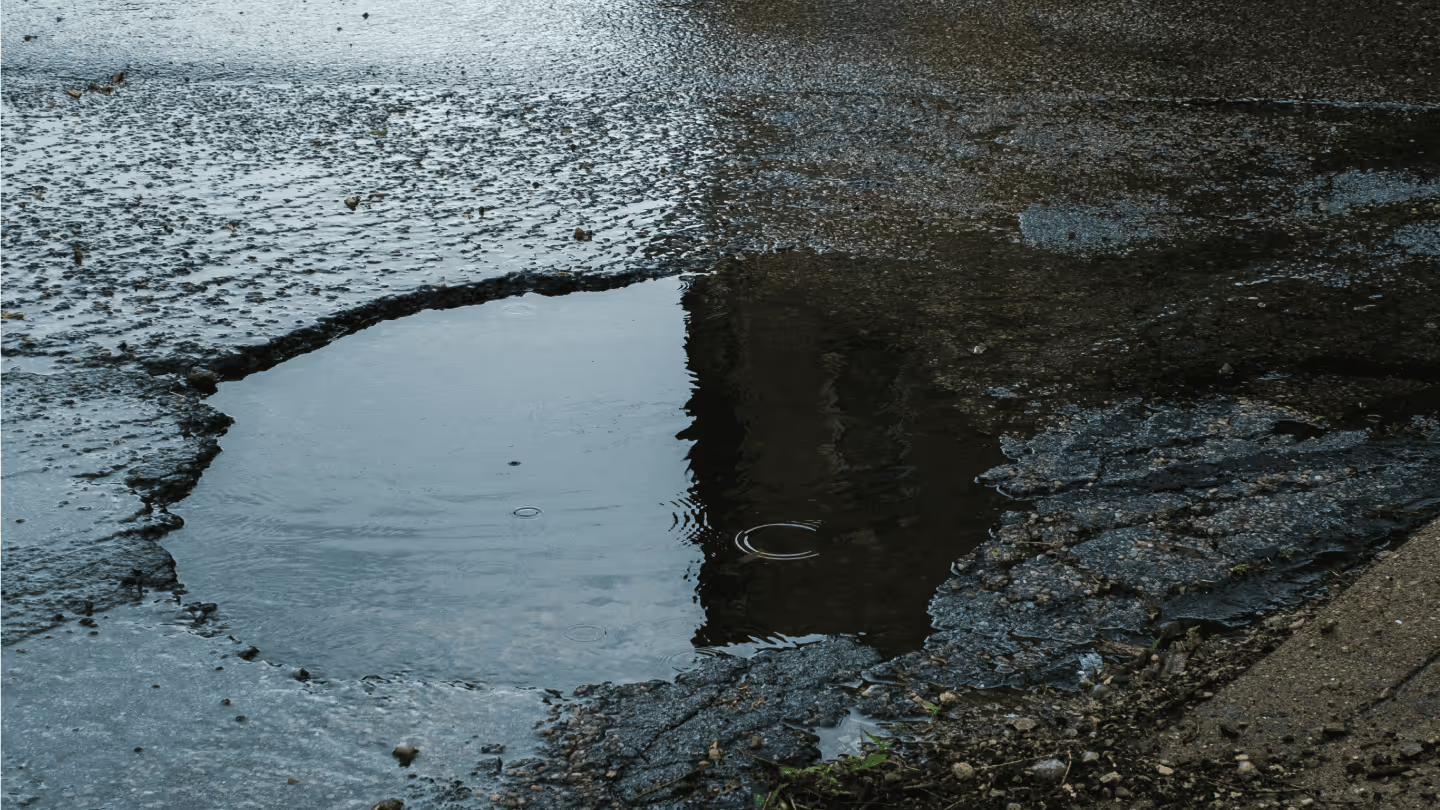
Pothole-related crashes are frustratingly common in the UK. If you have cycle insurance that covers accidental damage, you may be compensated. Even if you don’t, you may be able to claim against the local highway authority responsible for maintaining that road.
To build a case, you’ll need to document the pothole (photos with something for scale), report it to the local council, keep records of your injuries and bike damage, and ideally get witness details. The council will typically argue that they had a reasonable inspection schedule. A solicitor experienced in cycling claims can advise on the strength of your case.
How can I reduce the risk of a crash?
Keep your bike well-maintained, and if you are on the road, practice defensive riding. If it’s been a while since you used a bike, it’s worth brushing up on your skills by taking a lesson or two.
Helmets. helmets aren’t legally required for cyclists in the UK.Still, it’s worth being aware that if you’re involved in an accident that leads to a personal injury claim, not wearing a helmet is sometimes applied by insurers to reduce the compensation they pay out. This is a stark illustration of why it’s important to use a specialist solicitor with expertise in representing cyclists.
Cameras. A handlebar or helmet-mounted camera can provide invaluable evidence if you’re involved in a road traffic collision. There is no reason why camera footage of this kind should not be admissible as evidence, just as CCTV footage is. In practice, it would likely need to be backed up by a witness statement, and the footage may have to be downloaded to a CD with a certificate, countersigned by a solicitor, confirming that it has not been altered from its original digital format.
Cycle insurance. At Sundays, we cover crash damage alongside theft and accidental damage. If your bike is damaged in an accident, whether it’s your fault or someone else’s, your policy covers the repair or replacement. That’s one less thing to worry about when you’re already dealing with the aftermath of a crash.
Can I be counter-sued if I make a compensation claim against a driver?
Yes. The driver who is the defendant in an action you take can make a counter-claim for any damage to their vehicle caused by you as a cyclist in the collision. This can include repair costs and replacement vehicle hire costs. Cycle insurance with third-party liability cover will protect you from any such claim. Alternatively, if you or your partner has home and contents insurance, you are highly likely to be covered for third-party liability while cycling.
What happens if I am to blame?
Your cycle insurance may include third-party liability cover that will protect you if someone makes a claim against you. Failing that, if you have home and contents insurance, you will almost certainly be covered for third-party liability while cycling.