Cycle to work scheme explained
The cycle to work scheme lets you get a bike through your employer and pay for it in instalments before tax, saving you 25-40% on the retail price. It's been running since 1999 and over a million people have used it. Here's how it works, what it actually saves you, the catches most guides leave out, and what happens when the hire period ends.

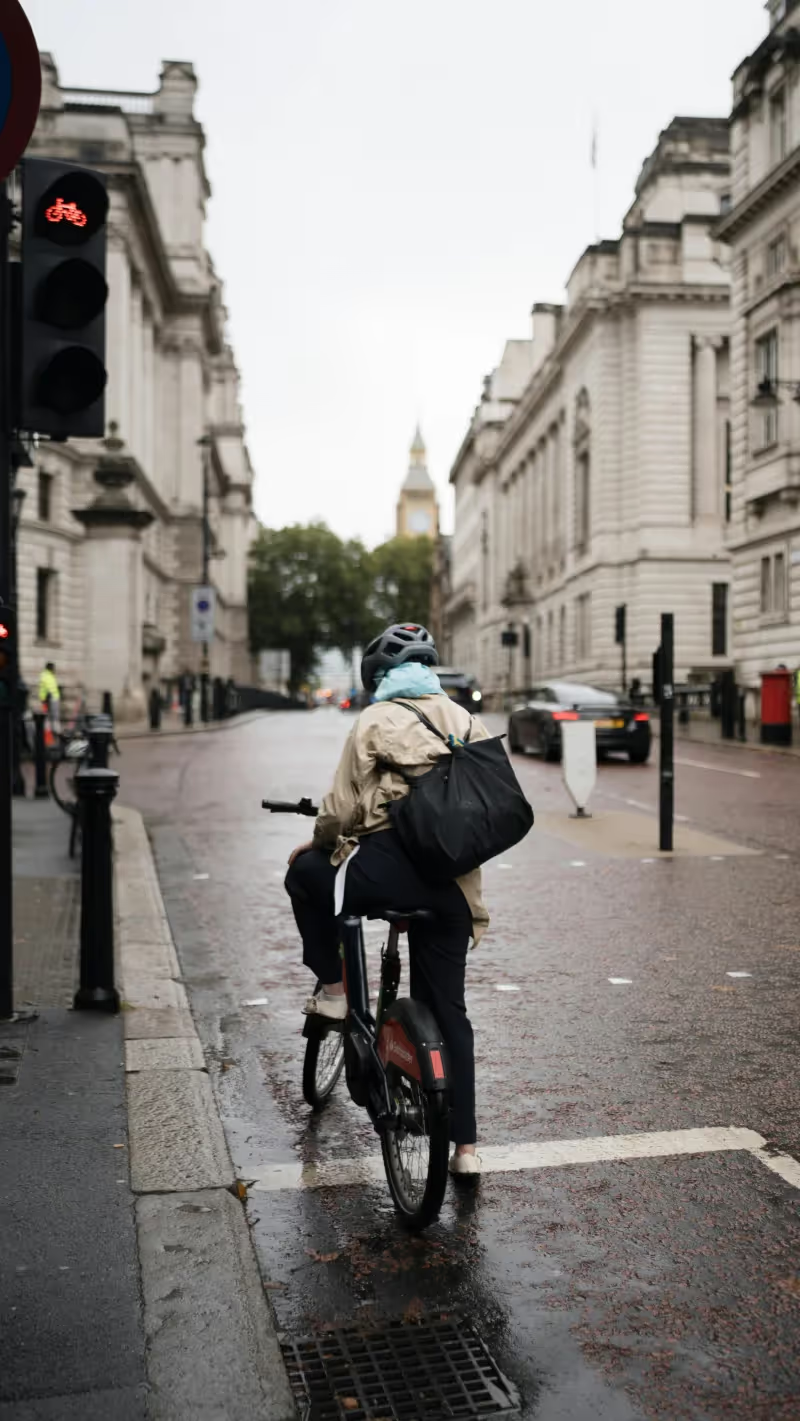
The government's Cycle to Work scheme lets you save 28–42% on a new bike, but only if your employer has signed up. Here's how it works and how to make the most of it.
Cycle to Work is a bit like the PCP arrangement many people use to buy a new car: there’s no upfront cost, a monthly payment, and an optional balloon payment at the end if you want to own the vehicle outright. But Cycle to Work is better because it’s a government-backed salary sacrifice initiative that lets you spread the cost of a bike over 12-24 months while saving on tax and national insurance. That means savings of 28% to 42% depending on which tax bracket you are in.
The scheme has remained largely unchanged since its launch in 1999, but here is everything you need to know in 2026.

How the scheme works
The basic mechanism is straightforward. You choose the bike and accessories you want, which are then bought by your employer on your behalf, then you "hire" the bike through monthly salary sacrifice payments. Because the payments come out of your gross salary (before tax and national insurance are deducted), you pay less overall.
The scheme runs between 12 -24 months depending on the provider. The longer the hire period, the lower your monthly payment (and no financial penalty as it is interest free). At the end of the hire period, you have a few options: extend the hire for a small annual fee (often £1), purchase the bike at its fair market value (in practice this is a negligible amount), or return the bike to your employer. No surprise that most people keep the bike.
How much can you save?
Your savings depend on your tax bracket. Because payments are deducted from your gross salary, you save on both Income Tax and National Insurance (NI) contributions.
Basic rate taxpayers (20%) save roughly 28% on the total cost of the bike and accessories. This includes savings on income tax (20%) and national insurance (8%). Note: the NI rate for basic rate taxpayers dropped to 8% in 2024, so older guides quoting a 32% saving for basic rate taxpayers are now out of date.
Higher rate taxpayers (40%) save around 42%. At this income level, NI contributions drop to 2%, so the saving is made up of 40% Income Tax and 2% NI.
Additional rate taxpayers (45%) can save around 47%, combining Income Tax and NI savings.
Example: a £2,000 e-bike through the scheme would cost a basic rate taxpayer around £1,440, which is a monthly payment of £60 per month over two years and a total saving of £560.
A higher rate taxpayer would pay around £1,160 – that’s a monthly payment of £48 over two years and a £840.
Note: Most schemes also charge a small end-of-hire fee if you wish to take ownership of the bike (typically 3–7% of the original value, depending on the bike's price). For a £2,000 bike, this could be as little as £60.

What you can buy
You can use the scheme for e-bikes, bicycles, trikes and adapted cycles (road, mountain, hybrid, folding, cargo etc), and cycling accessories such as helmets, lights, locks, panniers, mudguards, and cycling clothing.
You cannot use the scheme for e-bikes that do not meet the definition of an EAPC, electric scooters, or bike insurance. Insurance needs to be arranged separately.
How much can I spend?
Since the £1,000 cap was effectively removed in 2019, there's no official upper limit on how much you can spend through the scheme. This opened the door to e-bikes, which were previously too expensive to qualify in most cases. Despite rumours ahead of the 2025 Budget that the cap might be restored, the scheme remains unchanged.
Who can use it?
The scheme is only available to those whose employer offers it. Most medium and large employers do, and many smaller companies have signed up as well. You need to be a PAYE employee (it doesn't work for self-employed individuals).
If your employer doesn't currently offer the scheme, it's worth asking. There's no cost to the employer to set it up, and if they go through a third-party provider such as Cyclescheme, Green Commute Initiative, Cycle Solutions, all the administration is taken care of

FAQs
Can I use it for an e-bike?
Yes, and this is one of the best uses of the scheme. E-bikes that meet EAPC requirements (pedal-assist only, motor cuts out at 15.5 mph, maximum 250W continuous power) qualify. Given that e-bikes typically cost £1,500 to £4,000, the tax savings are substantial.
What happens at the end of the 12 months?
At the end of your hire agreement, you can keep the bike by paying a small "fair market value" fee or extending the hire. HMRC guidelines set the fair market value at a percentage of the original price (usually 3–7% for bikes used for 12 months, although in practice it often ends up being a small token amount).
Does the bike have to be used for commuting?
Yes and No. To qualify for the tax exemption, HMRC guidelines require that at least 50% of the bike's use is for commuting or work-related journeys. You are still completely free to use it for weekend leisure rides alongside your commute.
Could the Cycle to Work scheme be improved?
The Cycle to Work scheme has been criticised for favouring higher earners, and particularly those spending large sums on bikes unlikely to be used for commuting. There was speculation this would lead the chancellor to impose a limit on bike value, but the most recent budget left the scheme unchanged. Some believe a more equitable way to boost cycle commuting in the UK would be to remove VAT from all bicycles below a certain price.
Do you have to insure a Cycle to Work bike?
You don’t have to insure a Cycle to Work bike, but it’s typically a good idea. If the bike is stolen before the hire agreement ends, you will still have to keep up the monthly payments.
Protecting your new bike
Theft and accidental damage are real risks if you're commuting daily and locking up in public. Dedicated bicycle insurance from Sundays covers your Cycle to Work bike from day one, whether you're commuting, riding for fun, or both.
.avif)